Why Carbide Endmills Matter in Extrusion Dies
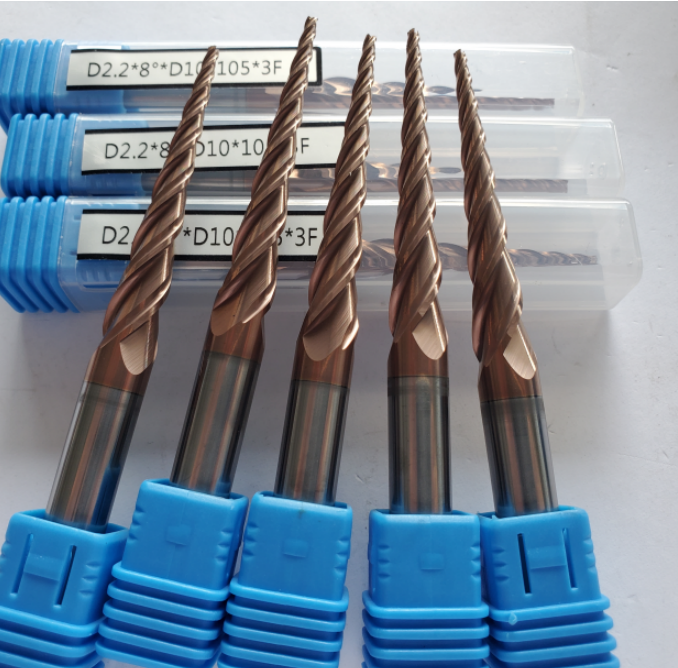
The aluminum extrusion die is the core component of aluminum profile production, directly determining the shape, precision, and surface quality of final aluminum products. As the aluminum processing industry develops, the demand for high-precision, high-efficiency, and long-life aluminum extrusion die grows rapidly. In aluminum extrusion die processing, cutting tool selection is key to efficiency, quality, and cost. Among tools, the carbide endmill is indispensable due to its excellent performance, greatly promoting the industry’s upgrading. Especially the tapered carbide endmill, which plays an irreplaceable role in processing the lower die’s back relief and die head’s guide groove, significantly shortening EDM machine processing time, boosting efficiency, and ensuring quality. This article explores the importance of carbide endmill in aluminum extrusion die processing, focusing on tapered carbide endmill advantages and its coordination with 3 axis machine, 5 axis machine, and EDM machine.
Aluminum extrusion die is a precision mold that shapes aluminum billets into various profiles via extrusion, with a complex structure including die head, lower die, back relief, and guide groove. These parts require high precision—any slight error can damage the aluminum profile or even scrap the die. Traditionally, key parts like back relief and guide groove relied on EDM machine, which offers high precision but suffers from low efficiency, long cycles, and high costs. This shortcoming has driven the wide use of carbide endmill in aluminum extrusion die processing.
Also called tungsten steel endmill, the carbide endmill is made of tungsten carbide, featuring high hardness, wear resistance, high temperature resistance, and good toughness. Compared to traditional high-speed steel endmills, it excels in hardness, wear resistance, and service life, making it ideal for aluminum extrusion die processing. In aluminum extrusion die processing, the carbide endmill works with 3 axis machine and 5 axis machine for efficient, precise processing. The 3 axis machine is suitable for simple contours, with stable performance and low cost; the 5 axis machine has flexible angles for complex curved surfaces, working with carbide endmill to enhance precision and efficiency. Their coordinated application has become the mainstream of modern aluminum extrusion die processing.
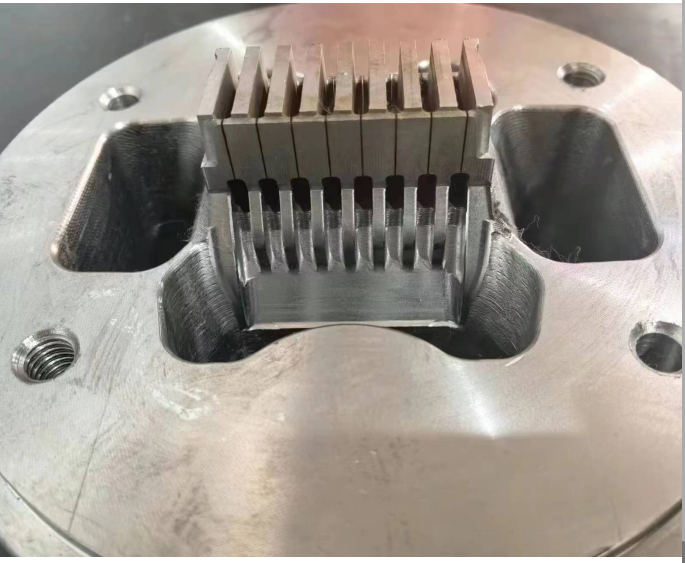
The lower die’s back relief and die head’s guide groove are critical to extrusion effect and product quality: the back relief reduces friction and prevents scratches, while the guide groove ensures uniform aluminum billet flow and profile thickness. Traditionally processed by EDM machine, these parts take 8-12 hours (back relief) and 6-10 hours (guide groove), prolonging the aluminum extrusion die production cycle and increasing costs.
The tapered carbide endmill solves these issues. As a special carbide endmill with a tapered cutting edge, it perfectly matches the contours of the back relief and guide groove. Compared to ordinary carbide endmills, it has three key advantages: one-time forming to reduce processing time, sharp and wear-resistant edges to ensure surface finish and precision (avoiding EDM machine defects), and compatibility with 3 axis machine or 5 axis machine for high-speed, high-precision processing.
In practice, the tapered carbide endmill drastically shortens EDM machine processing time. For the lower die’s back relief, EDM machine takes 8-12 hours, but tapered carbide endmill with 5 axis machine finishes it in 2-3 hours (plus minor EDM machine finishing), cutting time by over 70%. For the guide groove, EDM machine takes 6-10 hours, while tapered carbide endmill with 3 axis machine completes it in 1-2 hours, also cutting time by over 70%. This reduces the aluminum extrusion die production cycle, EDM machine energy consumption, and costs, boosting enterprise benefits.
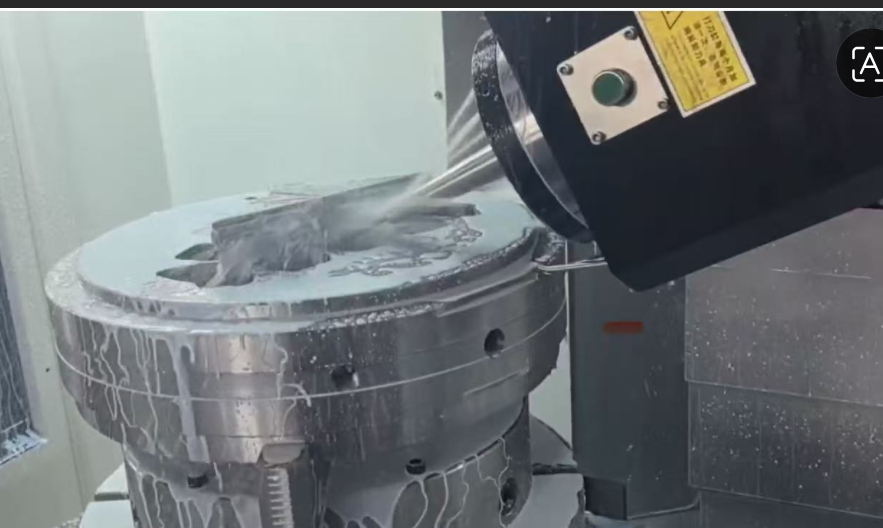
Beyond efficiency, the carbide endmill ensures aluminum extrusion die quality. It offers high precision and wear resistance, keeping dimensional errors within limits and meeting surface finish requirements. The tapered carbide endmill fits contours more accurately, avoiding EDM machine’s uneven surfaces and deviations, ensuring consistent quality. It also reduces die blank damage and scrap rates, cutting costs further. Practice proves aluminum extrusion die processed by carbide endmill has a longer service life and higher profile qualification rates.
The coordinated application of carbide endmill, 3 axis machine, 5 axis machine, and EDM machine forms a complete aluminum extrusion die processing system. The 3 axis machine and 5 axis machine handle rough and semi-finishing with carbide endmill, while EDM machine does finishing—ensuring precision and efficiency. The 5 axis machine, with flexible performance, cooperates with tapered carbide endmill to process complex surfaces hard for 3 axis machine. EDM machine supplements by fixing minor carbide endmill processing defects, improving surface quality. This combination achieves efficient, high-precision, low-cost aluminum extrusion die processing.
With technological progress, carbide endmill performance improves—new materials and coatings enhance wear resistance and service life, reducing tool changes. CNC technology promotes closer cooperation between carbide endmill, 3 axis machine, and 5 axis machine, enabling automatic, intelligent processing and reducing errors.
In today’s fierce aluminum processing competition, carbide endmill application in aluminum extrusion die processing is key to enterprise competitiveness. It shortens cycles, cuts costs, and improves aluminum extrusion die and profile quality, helping enterprises gain market share. Traditional tools and methods can no longer meet market demands and will be eliminated.
In conclusion, the carbide endmill plays an irreplaceable role in aluminum extrusion die processing. Its excellent performance boosts efficiency, quality, and cost-effectiveness, driving industry development. The tapered carbide endmill, in particular, shortens EDM machine time, solving traditional processing inefficiencies. The coordinated application of carbide endmill, 3 axis machine, 5 axis machine, and EDM machine will be the mainstream, creating more value for the aluminum processing industry.