7 Axis CNC Boosts Extrusion Die Efficiency
7 Axis CNC Machines Redefine Large Aluminum Extrusion Die Manufacturing
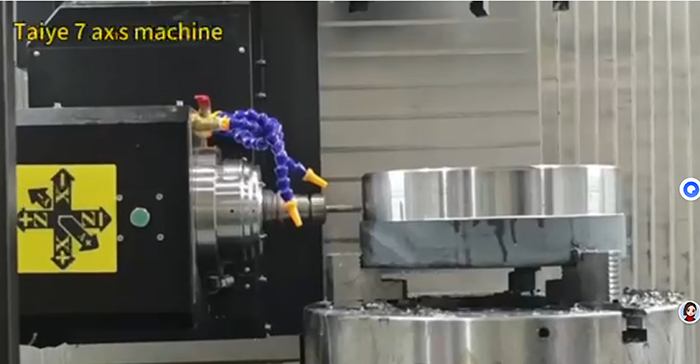
In the modern aluminum extrusion die industry, manufacturers are continuously seeking ways to improve precision, reduce lead times, and lower production costs. The adoption of advanced CNC machine technology—especially the rise of the 7 axis machine—is transforming how large and complex dies are produced, offering significant advantages over traditional machining methods.
Limitations of Traditional Machining
Conventional production of large extrusion dies typically relies on 3 axis machine tools or a combination of multiple machines. While 3-axis equipment is stable and widely used, it requires repeated setups to complete different machining processes such as milling, drilling, and tapping. Each repositioning introduces alignment errors and increases labor intensity.
The introduction of 5 axis machine technology improved this situation by allowing multi-face machining in fewer setups. However, when dealing with large dies featuring deep cavities, complex flow channels, and multi-angle holes, even 5-axis systems often require secondary clamping and auxiliary processes. This results in longer production cycles and higher operational costs.
7 Axis Machine: Full Process in One Setup
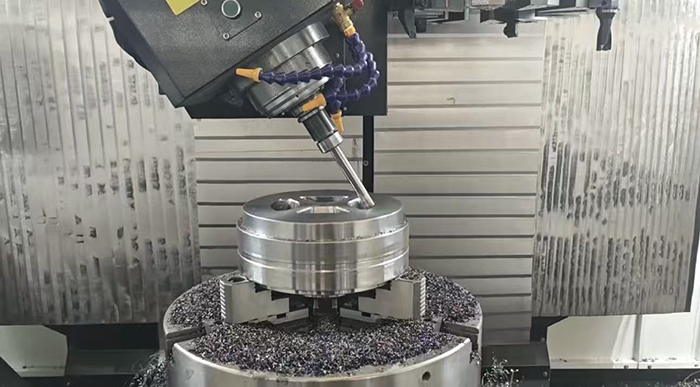
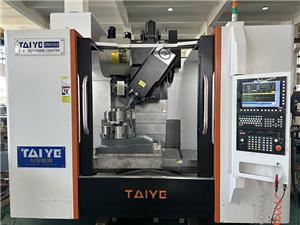
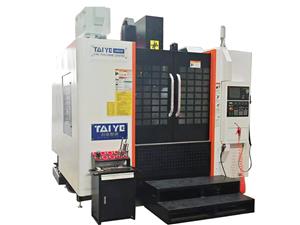
A 7 axis machine integrates turning, milling, drilling, and tapping into a single platform. Before heat treatment, all machining processes can be completed in one clamping. This breakthrough capability significantly reduces cumulative errors caused by multiple setups and ensures higher dimensional accuracy.
For large aluminum extrusion dies, which are often heavy and difficult to reposition, single-setup machining is particularly valuable. It minimizes handling time and avoids deformation or misalignment during repeated clamping.
Efficiency Improvement Compared to Traditional Methods
Compared with traditional processes, the efficiency gains of a 7 axis CNC machine are substantial. A process that previously required multiple machines and 5–10 setups can now be completed in one continuous operation.
3 axis machine: Multiple setups, long idle time, high manual involvement
5 axis machine: Reduced setups, improved flexibility, but still limited for deep structures
7axis machine: Single setup, continuous machining, minimal human intervention
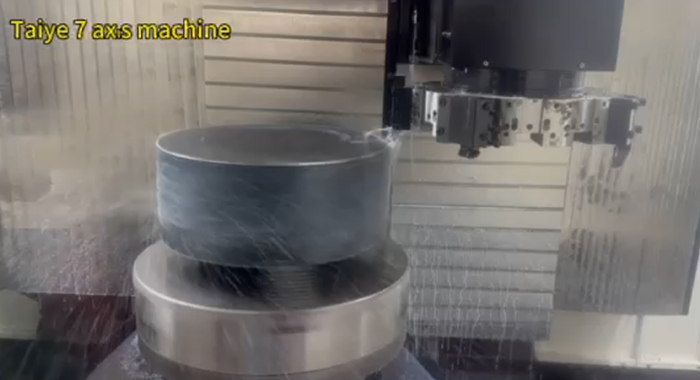
This integration can reduce setup time by more than 60% and significantly shorten the overall production cycle, enabling faster delivery of large dies.
Cost Advantages and Long-Term Value
Although the initial investment in a 7 axis machine is higher than traditional equipment, the long-term cost benefits are clear.
First, labor costs are reduced due to fewer manual operations and less dependence on skilled alignment work. Second, improved precision lowers scrap rates and minimizes rework. Third, shorter production cycles increase machine utilization and throughput, improving overall profitability.
Additionally, better tool accessibility allows the use of shorter and more rigid cutting tools, extending tool life and reducing tooling costs.
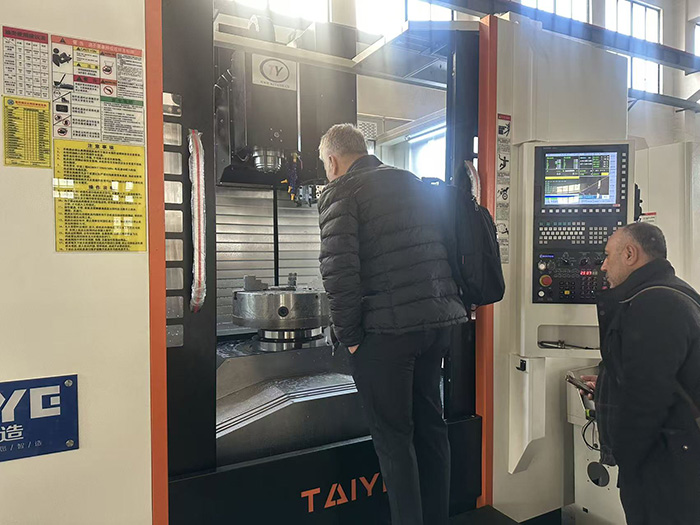
Solving Deep Hole and Complex Structure Challenges
Large aluminum extrusion dies often include deep holes, narrow channels, and complex internal geometries that are difficult to machine using traditional methods. These features create “blind spots” for 3 axis machine and even 5 axis machine setups.
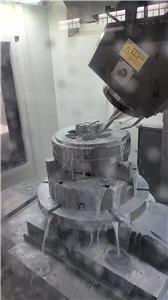
A 7 axis machine eliminates these limitations by enabling multi-directional tool access and optimal cutting angles. It allows efficient machining of deep cavities and complex structures without excessive tool length, improving both surface quality and machining stability.
Industry Outlook
As the demand for high-performance aluminum profiles continues to grow, die complexity is increasing accordingly. Advanced CNC machine solutions are becoming essential for maintaining competitiveness.
While 5 axis machine technology remains suitable for many standard applications, the 7axis machine is emerging as the preferred solution for large, high-value extrusion dies. Its ability to combine efficiency, precision, and cost control makes it a key driver in the future of intelligent manufacturing.
Conclusion
The shift from traditional machining to advanced multi-axis CNC machine technology marks a major step forward in the aluminum extrusion die industry. For large dies, the 7axis machine delivers unmatched advantages in efficiency and cost performance.
By enabling full-process machining in a single setup, it reduces production time, improves accuracy, and lowers overall costs—making it an increasingly strategic investment for manufacturers aiming to stay ahead in a competitive market.